
The Complete Guide to Trees with Red Leaves

Adding a plant with striking foliage changes your entire landscape. You get vibrant colors that last from early spring through late autumn.
What are the best types of trees with red leaves
Undoubtedly, the Japanese Maple tree is the one and only option for any garden. Not only do they have beautiful foliage throughout the whole year of growth but they are also compact and do not need much pruning. The inherent adaptability of the Japanese Maples allows them to fit perfectly into different sizes of gardens – from large and spacious to those located in urban areas.
This guide will help you understand what kinds of Japanese Maples would suit your garden the best. You will receive information about the necessary planting techniques and realistic gardening maintenance methods which will provide longevity to your plant. Moreover, you will learn about the basics of plant biology and urban forestry.
Top Varieties for Vibrant Foliage
Selecting the perfect plant depends entirely on your local climate and available planting space. Here are the most reliable options available today.
Small and Decorative Varieties
Japanese Maple Acer palmatum
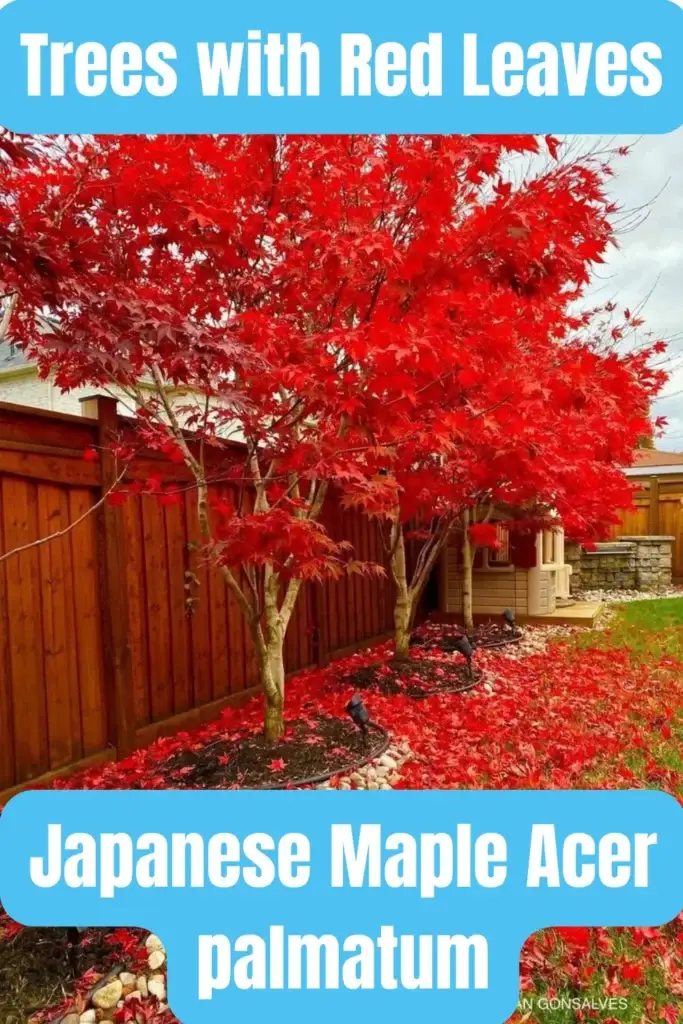
Japanese Maples add a lot of color and unique textures in small garden spaces. These small squat trees make an ideal choice for urban gardening and compact courtyards. Partial sun light and good drainage soils are their favorite conditions. I planted three of them in my suburban garden last year. They offer amazing red leaves every spring season to fall season. They grow slowly, thus you will not have to prune them every year for many hours. They also grow in 20 gallon pots in patios. The Crimson Queen Japanese Maple offers cascading branches that are stunning beside the small ponds. You should protect them from strong winter winds.
Forest Pansy Redbud Cercis canadensis
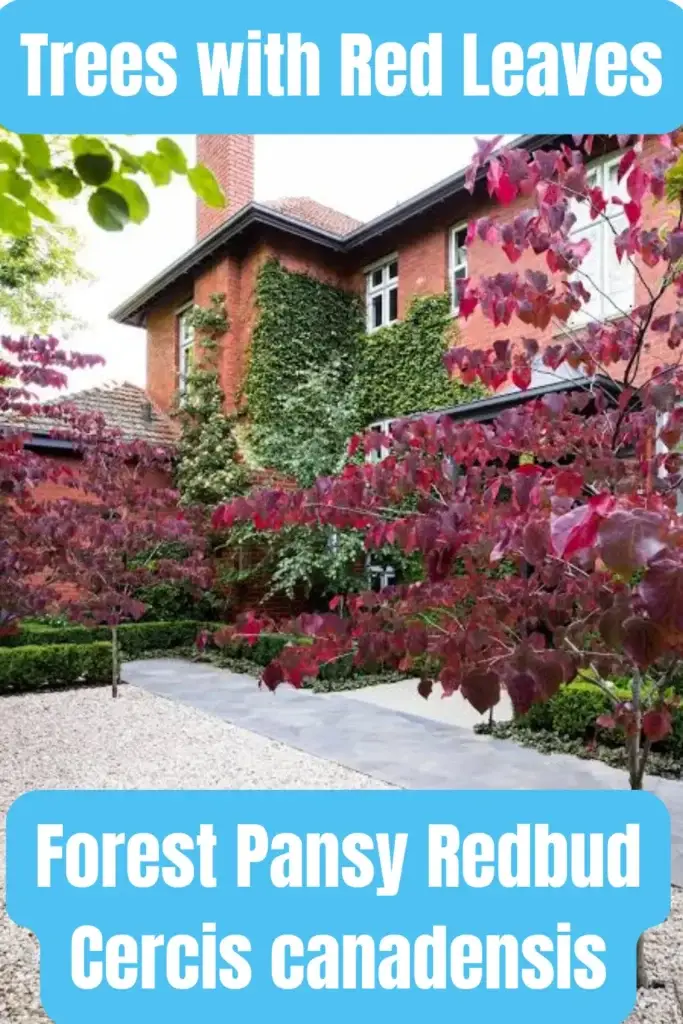
The Forest Pansy Redbud has large heart-shaped leaves which range in color from purple to crimson. In addition, it has pink flowers that bloom on the tree during the early spring season on its naked branches. It remains quite small, growing up to 20 to 30 feet in height. It is easy to grow under other bigger shade trees.
Large Shade Providers
Red Maple Acer rubrum
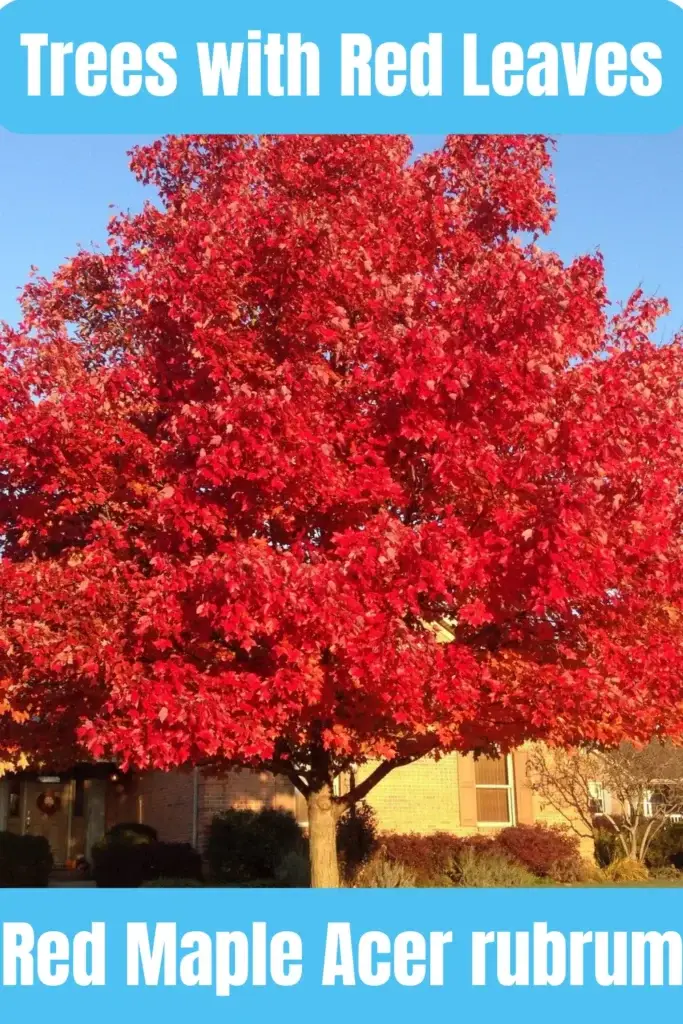
To have a large shade tree, the Red Maple is one of your best choices since it grows rapidly to a height of 60 feet. The trees turn a spectacular red color every autumn season. You should plant them with enough space from your house and above your electrical wires. They are more resistant to waterlogged soil compared to other types. Thus, they are ideal to be planted in damp areas of your yard.
Crimson King Maple Acer platanoides
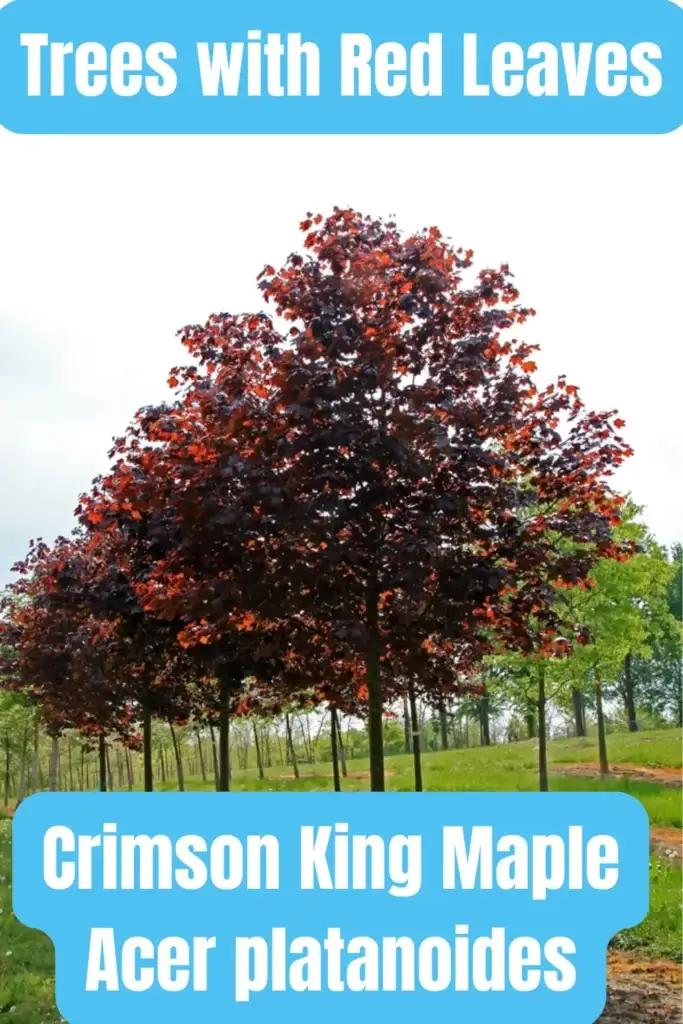
Crimson King Maple maintains its dark purple to burgundy leaves through summer. The tree is very fast-growing and makes dense shade. One should not plant this tree near any flower garden because its shallow roots compete with other small plants for moisture and nutrients in the soil.
Comparing Popular Options
Review this comparison to find the best match for your yard.
| Tree Variety | Growth Rate | Best For | Ease of Use |
|---|---|---|---|
| Japanese Maple | Slow | Small yards and patio containers | Medium maintenance required |
| Red Maple | Fast | Large open landscapes and thick shade | Very easy to grow |
| Forest Pansy Redbud | Medium | Spring flowers and understory planting | Easy to grow |
Understanding Foliage and Biology
You might wonder how these plants survive and grow when their foliage is not green. The science behind their brilliant colors is fascinating.
How Do Trees with Red Leaves Photosynthesize
Chlorophyll is an essential component for plants when it comes to converting light energy into food. Chlorophyll is naturally green in color as far as humans are concerned. In case there are plants which have burgundy or crimson colored leaves, it just means that the plants have adequate amount of chlorophyll concealed within the leaves. Anthocyanins are naturally occurring plant pigments and are responsible for the crimson color. Anthocyanins only hide the green color of chlorophyll beneath them.
Common Biological Questions
Do trees sleep at night
Plants do not have a sleeping pattern exactly like that of humans or animals. Plants do have an inherent daily resting phase, though. At night, when there is no sunlight directly available, plants cease performing photosynthesis and concentrate solely on respiration inside the plant. They utilize the energy they acquired during the day for the purpose of growing their roots and healing any damage. Deciduous plants shed their leaves during winter and enter a state of dormancy.
Buying and Planting Guide
You need to know exactly where to find healthy specimens and how to establish them correctly in your home garden.
Where to Find Affordable Options
The local gardening shops will have these popular plants in their store during the planting season. When you buy locally, you get an opportunity to look at the roots and the foliage. You can even purchase them from the internet. Sites such as the Arbor Day Foundation have affordable young trees delivered straight to your doorstep when it is the right time to plant them.
Planting Tips for Success
Follow these specific steps to ensure your new plant thrives for many years.
- Dig a wide planting hole that is twice as wide as the current root ball.
- Ensure the top of the root system sits slightly above the surrounding soil line to prevent root rot.
- Water the area deeply and immediately after planting to remove all hidden air pockets in the dirt.
- Apply a thick 3 inch layer of organic mulch around the base to retain vital soil moisture.
- Water your new plant deeply once a week during its first full summer.
| Important Warning Never pile mulch directly against the bark of the trunk. This common gardening mistake traps unwanted moisture against the wood and invites serious fungal disease or pest infestations. Always leave a clear gap of 3 inches around the base. |
Maintenance and Long Term Care
Proper maintenance guarantees your plants will remain completely healthy and incredibly colorful for decades.
Watering and Soil Requirements
The majority of the brightly colored cultivars thrive in soil that is well-drained but remains moist. Clay soil retains too much water and drowns the root system of such plants. In case you have clay soil, it will be necessary for you to add ample quantities of organic matter to enhance the drainage quality of the soil before planting. In times of extreme drought, you can make use of a slow dripping hose to give moisture to the roots.
Pruning and Shaping
It is recommended to do any heavy pruning during the late winter dormant phase. Cutting off any dead branches or any branches that cross each other enhances good air flow through the thick canopy. Proper air flow protects the plant from any fungal infections because fungi grow well in humid and stagnant air. The amount of healthy branches that can be cut down in a year is limited to 25 percent.
To maximize the bright colors of your autumn foliage, ensure your plant receives plenty of bright sunlight during late summer and early fall. The combination of bright sunny days and crisp cool nights triggers the most spectacular chemical color changes.
Frequently Asked Questions
What tree always has red leaves
Both the Japanese Maple and the Purple Leaf Plum will stay dark burgundy throughout their full growing season, though the particular color can vary somewhat according to temperatures and light conditions.
How to care for them in a hot climate
High summer heat may well burn any tender dark leaves. In case your place is a highly hot southern region, then you will have to make sure that your colored varieties get plenty of shade throughout the tough afternoon periods. Applying wood mulch and watering the plants twice weekly will help.
